
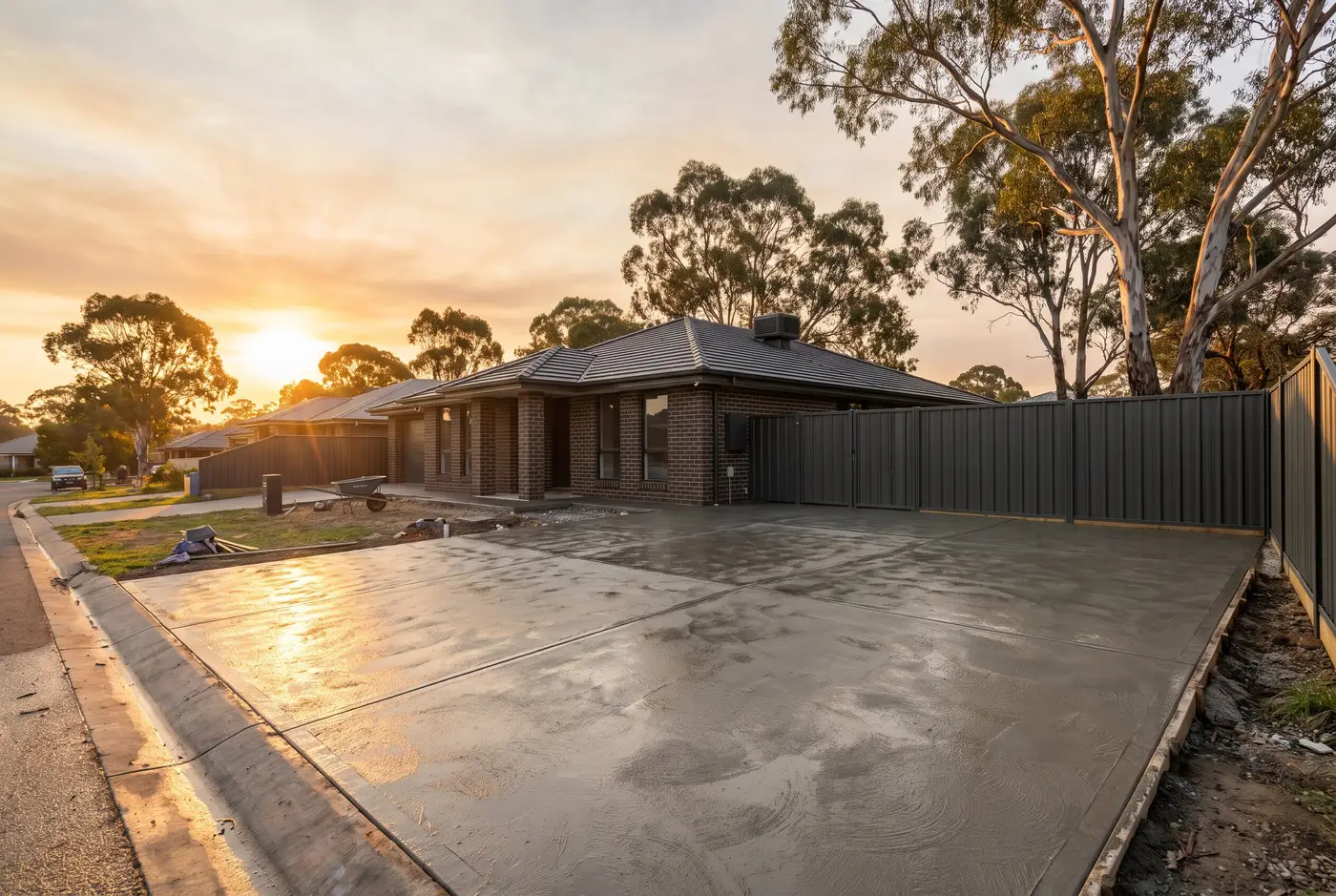
An exposed aggregate driveway is ordinary concrete with the top skin of cement paste washed back to reveal the stone inside, so the decision you are really making is about stone, colour and texture, not a coating.
The short answer
An exposed aggregate driveway is not a coating, a topping or a tile. It is a normal concrete slab where the thin layer of cement paste on top is washed back while the concrete is still fresh, so the stone mixed through the concrete sits proud of the surface and you walk on the rock instead of the cement.
That one fact drives everything else. The look is created on the day of the pour and cannot be changed afterwards, so the stone and the colour have to be chosen before the truck is booked. Concreters Near Me works across Newcastle, Lake Macquarie and the wider Hunter, and this is the decision homeowners most often leave until the last week when it should be the first one settled.
How the finish is made
How we worked this out: the four stages and the unchanged structural concrete below follow Boral's exposed aggregate concrete FAQs. No source we used gives a depth for the paste removed, so the diagram shows none.
The concrete is placed and screeded like any other slab. A surface retarder is commonly applied, or the crew waits for the right set window, and then the surface layer of paste is washed and brushed away to uncover the aggregate underneath. The structural body of the slab is untouched: it is the same concrete it would have been with a broom finish.
Because the stone is already in the mix, the aggregate choice is a mix specification, not a finishing choice. Boral's FAQ page on exposed aggregate concrete covers cost, installation, maintenance and customisation, and says Boral's "exposed aggregate colour range varies by region because we source aggregates from our local quarries." Holcim's Geostone decorative range is framed the same way: its products use natural Australian stone to create a surface that "combines the integrity of concrete with the beauty of natural stone", and its exposed concrete brochure covers driveways, pool surrounds, pathways and outdoor entertaining areas.
Exposed aggregate compared with the finishes you are choosing between
| Finish | How it goes down | Where the texture comes from | When the look is locked in |
|---|---|---|---|
| Exposed aggregate | Poured, then the top paste is washed back | The stone in the mix | On the day of the pour |
| Plain broom finish | Poured | Brushed into the paste layer | On the day of the pour |
| Unit pavers | Laid on a base, not poured | The pavers themselves | Chosen off a pallet, and any single unit can be lifted and replaced |
Source: the comparison in this guide; the stone-made texture per Boral's Exposé range.
This guide compares three options: exposed aggregate, a plain broom finish, or unit pavers laid on a base. The honest difference is not durability marketing, it is where the texture comes from and when the look is locked in.
Boral describes its Exposé range as creating "a textured, slip-resistant finish ideal for outdoor applications like driveways, patios, paths and pool surrounds", and suggests pairing a mix with a colour from its Colori range. That texture is inherent to the stone rather than brushed into a paste layer, which is the practical appeal for a sloping driveway off a Lake Macquarie street. We are not going to tell you it will never be slippery: no surface is, and wet leaves and oil do what they do on any driveway.
Pavers are laid, not poured, so the look is chosen off a pallet and any single unit can be lifted and replaced. A repair to an exposed aggregate slab is unlikely to match exactly: Boral notes that because its decorative concrete uses natural quarry materials, "some variation in appearance and consistency may occur from batch to batch." Weigh that before you choose.
The finish is exposed early, so curing still matters
Holcim AustraliaCuring is "the protection of fresh concrete from evaporation and temperature extremes which might adversely affect cement hydration".
Here is the part that gets skipped. Washing the surface back means the finished face of your driveway is uncovered while the concrete is still very young. Everything that applies to curing a plain slab applies here too.
Holcim defines curing as "the protection of fresh concrete from evaporation and temperature extremes which might adversely affect cement hydration". A decorative finish does not exempt a slab from that. If anything it raises the stakes, because the surface you are protecting is the surface you will be looking at for the next twenty years.
Our guide to how long concrete takes to cure covers what the first week needs, and our piece on pouring in hot weather covers what heat and wind do to a fresh slab. Ask your concreter how the slab will be cured, and for how long, before you sign anything.
What to settle before the truck is booked
Before the truck is booked, settle
Source: the points in this guide; stone and colour ranges per Boral and Holcim Australia.
Colour and aggregate are a design decision made once. Manufacturers offer both regional stone selections and colour ranges: Boral pairs its exposed aggregate range with its Colori colours on the Exposé product page, and Holcim's decorative range is built around Australian stone.
Two practical tips that cost nothing. Look at any sample outdoors in daylight rather than under shed lighting, because stone colour shifts hard between the two. And look at a sample the size of a paving slab rather than a palm-sized chip, since aggregate pattern only reads properly at scale.
Living with the surface
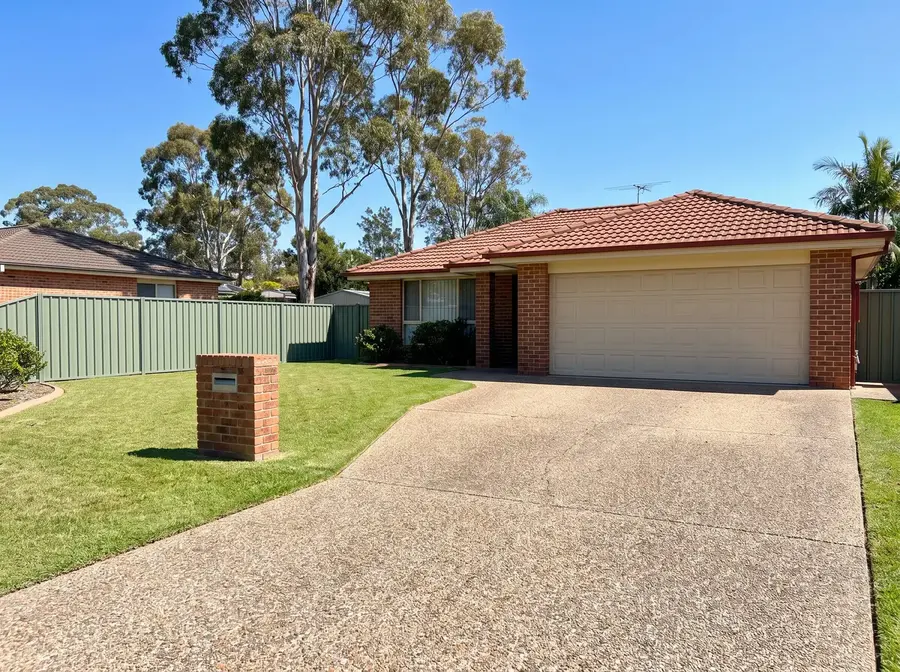
Upkeep is undramatic. Periodic cleaning to lift grit, leaf stain and oil out of the texture, and caution with harsh chemicals, will cover most of what a residential driveway needs. Boral's FAQ advises "Sealing the concrete every few years" and avoiding "harsh chemicals or high-pressure washing". How often your own driveway needs it depends on exposure, slope and traffic, so ask whoever pours your slab.
Data on how exposed aggregate driveways in the Hunter perform over time, compared with other finishes, is not something we hold. Where we have no figure, we say so rather than inventing one.
Your next step
If an exposed aggregate driveway is on your list, gather three things before you make contact: rough dimensions of the area, a photo of the existing driveway and its slope toward the street, and any stone or colour you have already seen and liked. Send those through the enquiry form at Concreters Near Me and say which Newcastle, Lake Macquarie or Hunter suburb you are in, so the conversation starts at the finish selection rather than the basics.
Sources
- https://www.boral.com.au/products/concrete/decorative/exposed-aggregate-concrete
- https://www.boral.com.au/exposed-aggregate-concrete-faqs
- https://www.holcim.com.au/products-and-services/decorative
- https://www.holcim.com.au/products-and-services/tools-faqs-and-resources/do-it-yourself-diy/curing-of-concrete-techniques