
Water troughs are essential for managing livestock and keeping a reliable supply of clean water up to stock. For a long-lasting, low-fuss solution, many farmers turn to concrete because of its proven durability and its ability to hold water without fuss. Concrete troughs stand up well to daily farm demands across a range of climates.
This article explains why concrete troughs are a practical investment, with a focus on performance, water retention and whether waterproofing is necessary.
Durability and longevity
Concrete troughs have earned their place on farms because they are tough. Many properties move away from plastic or metal troughs to concrete because it holds up better against the wear caused by weather and livestock.
On farms running large animals such as cattle, lighter troughs can crack, tip or degrade under daily use. Concrete handles that pressure without complaint. Where metal rusts over time and plastic can crack from sun exposure, concrete stays largely unaffected, which cuts down on replacements and the disruption that a failed trough causes.
Water retention and waterproofing
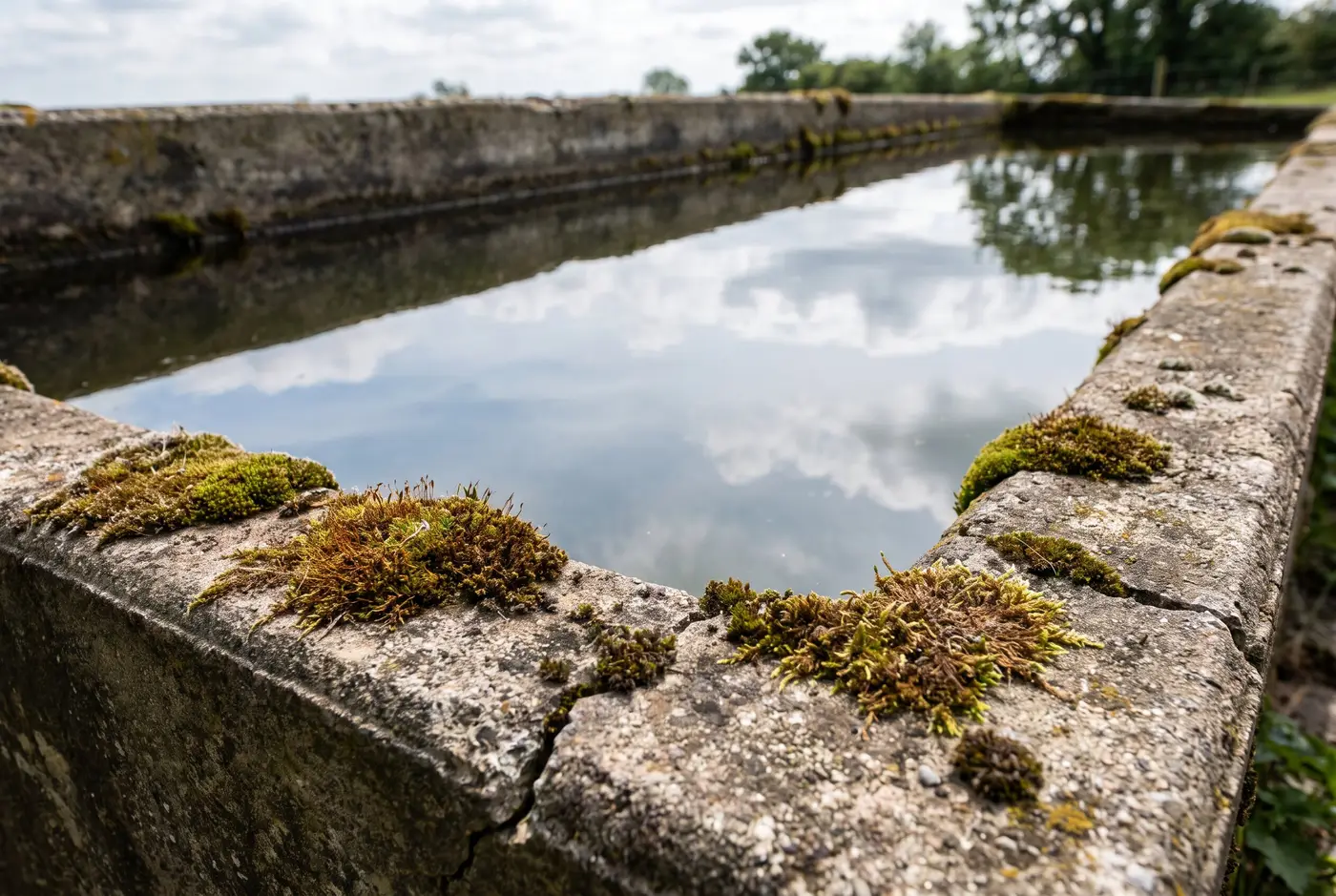
One of the most common questions is whether concrete troughs hold water well or need waterproofing. A properly constructed trough typically does not need extra waterproofing. The density of the concrete stops water seeping through, and it stays stable even with constant livestock movement.
Well-made troughs lose very little water to leaks, which matters most in warmer climates where evaporation from lighter materials can be a real problem. Some owners choose to add a waterproof sealant as extra insurance or to stretch the lifespan even further, but for a correctly mixed and poured trough it is a precaution rather than a necessity.
Low maintenance requirements
After installation, concrete troughs ask very little of you. Plastic troughs need regular checks for cracks and metal ones need rust treatment, while concrete simply gets on with the job. A quick scrub now and then keeps the surface clean, with no special coatings or treatments required.
Cost-effectiveness over time
A concrete trough can cost more up front than other materials, but it usually proves cost-effective over the long run. The initial outlay pays off as the trough keeps working with little need for repair or replacement. There is a labour saving too: less time spent on upkeep is more time for the rest of the farm, instead of replacing cracked plastic or corroded metal every few years.
Suitability for various farm sizes and types
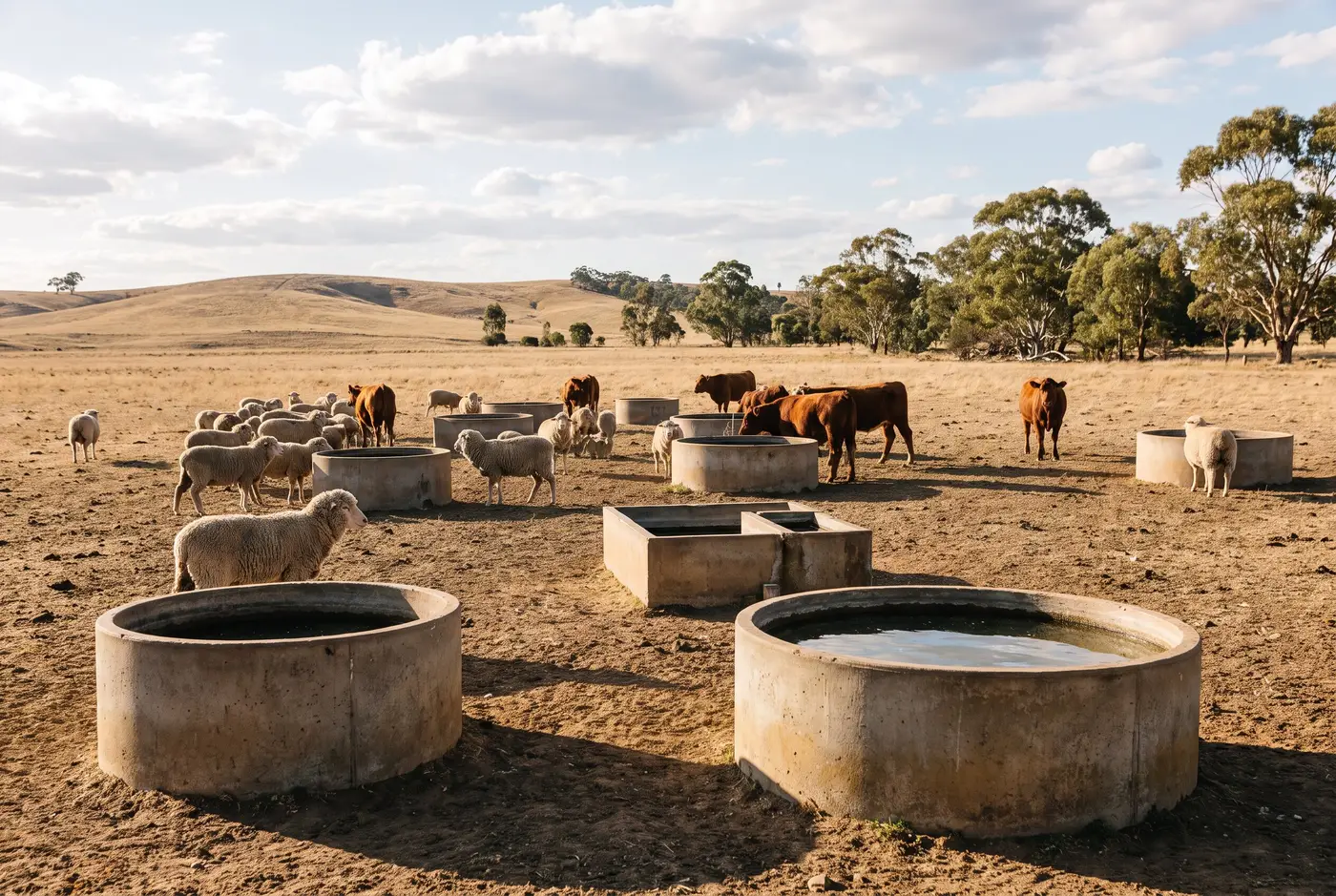
Concrete troughs suit a wide range of livestock, from cattle to sheep, on both small and large properties. Size and design can be tailored to the operation: larger farms often opt for bigger troughs to keep water up to more stock, while smaller operations choose more compact designs. Once set in a paddock, field or near the yards, a concrete trough rarely needs to be moved or adjusted.
Environmental considerations
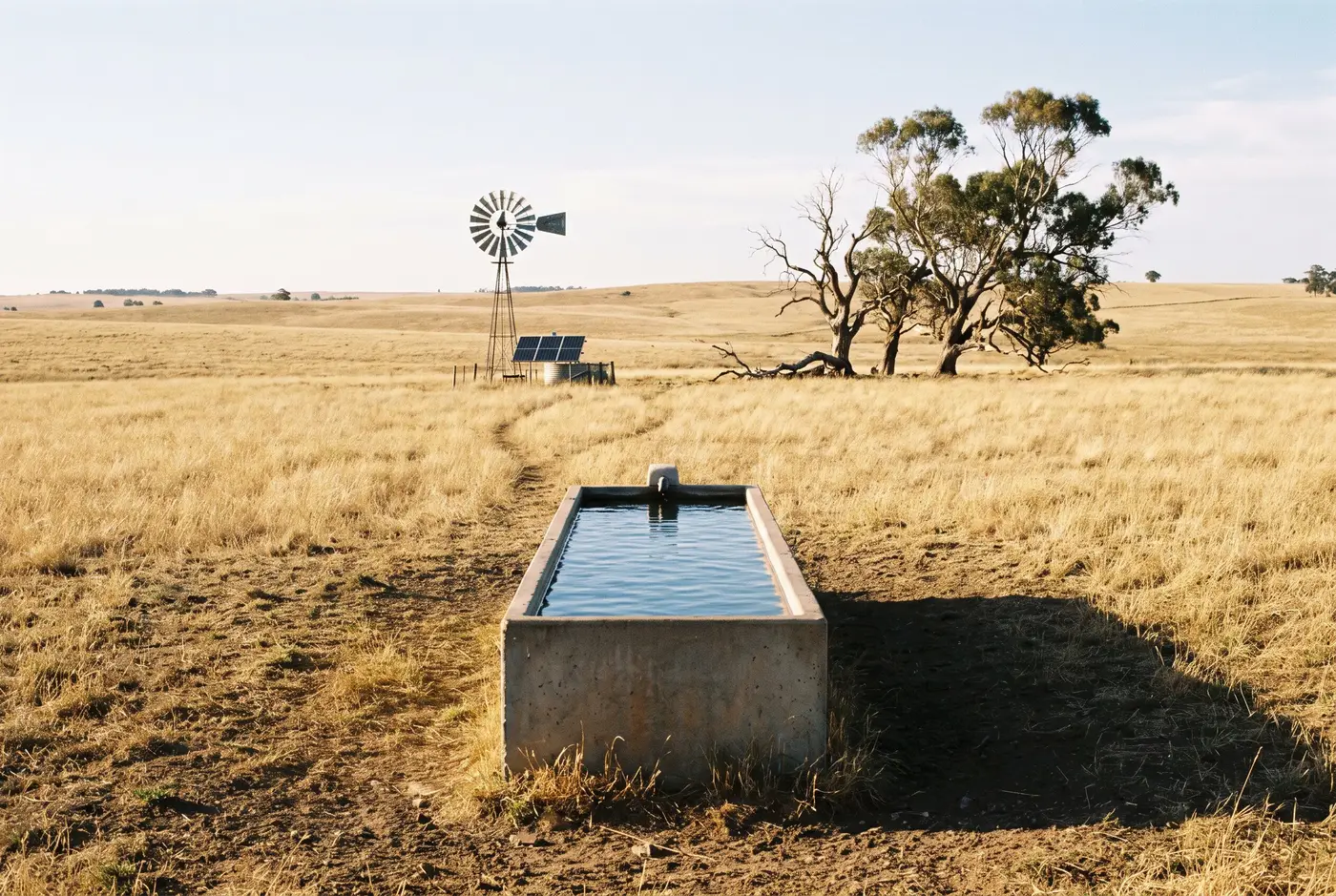
Concrete is made from natural materials, and its long lifespan reduces waste because troughs do not need replacing often. Holding water effectively also means less frequent refilling, which helps conserve water in regions where it is scarce, and that is good for both the budget and the environment.
The bottom line
Concrete troughs are a durable, reliable and cost-effective option for on-farm water management. They hold water well, do not usually require waterproofing, and shrug off the wear of farm life, all with minimal maintenance once installed. Whether you run a large property or a smaller block, a concrete trough offers the stability and efficiency you want.
If you are after concrete work tailored to your property or have any questions, get in touch and we will help you find the right solution.